



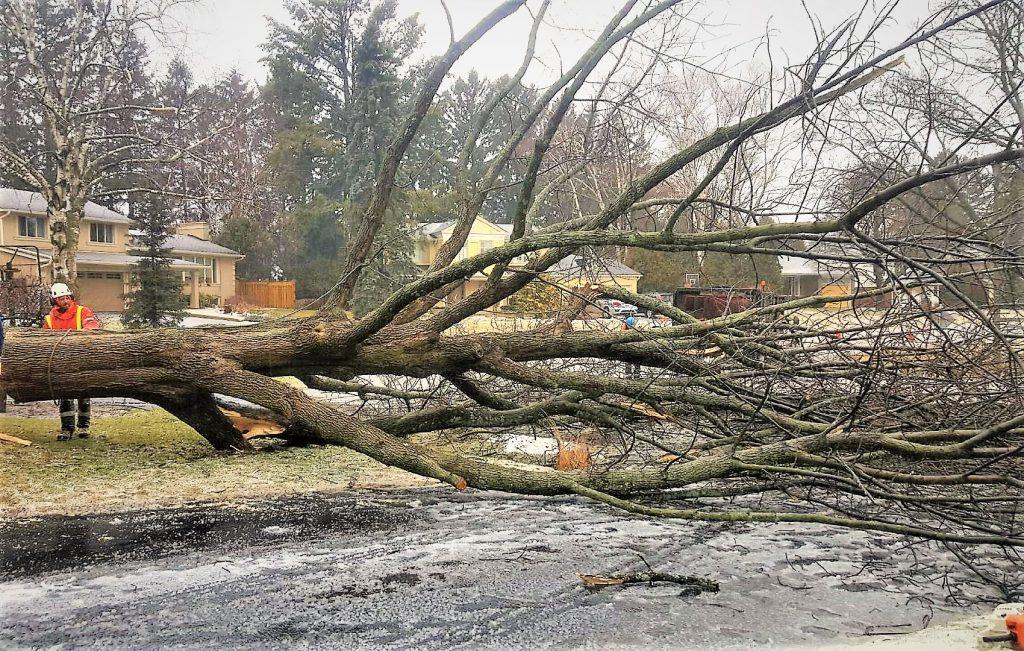
A powerful storm can pass through in minutes and leave your yard looking completely different. Branches may be scattered across the lawn, a previously straight tree may suddenly be leaning, or a heavy limb may be hanging precariously above your driveway. In more serious situations, an entire tree can come down on a fence, vehicle, roof, or utility line.
The first instinct may be to start cleaning everything up. However, storm-damaged trees can be unpredictable, and rushing into the cleanup can put you in danger.
Knowing what to do, and what not to do, immediately after a storm can help protect your family, property, and trees.
1. Check the Area From a Safe Distance
Before worrying about cleanup, determine whether the area is safe to approach. Walk around your property while maintaining plenty of distance from damaged trees. Look for obvious problems such as fallen trunks, large broken branches, split trunks, exposed roots, or trees that have suddenly started leaning.
Pay particular attention to branches that are broken but still attached to the tree. These are sometimes called “hangers” and can fall without much warning. A tree that appears stable from the ground may also have significant damage higher in the canopy, so don’t assume everything is safe simply because the tree is still standing.
2. Stay Away From Power Lines
Always treat a tree or branch touching an electrical line as dangerous. Never attempt to pull the branch away, climb the tree, or use a pole saw or other tool anywhere near electrical wires. Electricity can travel through branches and other materials, creating a potentially deadly hazard even when you aren’t directly touching the line.
Keep people and pets away from the area and contact the appropriate utility provider. If other trees on your property are damaged, you can evaluate them separately once the electrical hazard is addressed.
3. Look for Signs of Structural Failure
Not every damaged tree falls during the storm itself. Some remain standing but become structurally unstable.
After severe weather, look for warning signs such as:
- Fresh cracks or splits in the trunk
- Large broken limbs
- Newly exposed roots
- Soil lifting around the tree’s base
- A sudden or increased lean
- Major sections of missing canopy
- Branches hanging over buildings, vehicles, or walkways
- Cracks where large branches connect to the trunk
These problems deserve professional attention. Calling emergency tree services is particularly important when a damaged tree presents an active or immediate risk to people, buildings, vehicles, or other structures.
4. Don’t Assume a Damaged Tree Has to Come Down
Seeing a large broken branch can make a tree look beyond saving, but appearances can be misleading. Some storm-damaged trees can recover with appropriate pruning and ongoing care. Others may have suffered structural damage severe enough that removal is the safest option.
Several factors influence that decision, including the tree’s species, age, overall health, amount of canopy lost, condition of the trunk and roots, and location. A professional arborist can assess the entire tree rather than focusing only on the most obvious broken branch.
Whenever possible, preservation may be recommended before removal, provided the tree can remain structurally safe.
5. Avoid Major DIY Tree Work
Picking up small twigs and loose debris from an otherwise safe lawn is one thing. Attempting to cut down a damaged tree is another.
Storm cleanup becomes particularly dangerous when chainsaws, ladders, large branches, or partially fallen trees are involved. Damaged wood can be under enormous tension. Cutting the wrong section can cause a limb or trunk to shift, roll, split, or fall unexpectedly.
Trees that are leaning against buildings or other trees can be even more unpredictable. If the damage is beyond simple ground-level cleanup, leave it to professionals who have the training and equipment to handle unstable trees safely.
6. Document the Damage
Before significant cleanup begins, take photographs and videos of the damage if you can do so safely. Capture wide shots showing the overall scene as well as closer photographs of damaged trees, structures, fences, vehicles, and other affected areas.
This documentation may be useful if you need to contact your insurance company about property damage. Avoid entering an unsafe area simply to get a better photograph. Your safety is more important than documenting every angle.
7. Keep People Away Until Hazards Are Removed
Children and pets should stay away from storm-damaged areas. A partially broken branch can look harmless until wind moves it again. Similarly, a leaning tree may remain upright for hours or days before eventually failing.
If necessary, temporarily block access to affected sections of your yard, driveway, or walkway. When a tree is blocking access or threatening a structure, contacting emergency tree services can help you address the immediate hazard rather than waiting for a routine appointment.
8. Have Nearby Trees Inspected Too
The most visibly damaged tree isn’t necessarily the only one affected. Strong winds can weaken roots, create small cracks, damage branch unions, and compromise trees without causing immediate failure. Those problems may become more noticeable later, particularly during the next period of strong wind or heavy precipitation.
Ask an arborist to look at surrounding trees during the assessment. Identifying hidden or secondary risks now may help prevent another emergency later.
9. Think About Recovery After the Immediate Danger Is Gone
Once you’ve addressed dangerous trees and branches, you can turn your attention to recovery. Some trees may need corrective pruning to remove damaged wood and improve their structure. Others may benefit from monitoring or additional tree care. Severely compromised trees may need to be removed, followed by stump grinding or replacement planting.
Avoid aggressive pruning simply because a tree looks uneven after a storm. Removing too much healthy canopy can place additional stress on an already damaged tree. A professional assessment can help determine what the tree actually needs rather than making unnecessary cuts.
10. Don’t Wait When a Tree Is Clearly Dangerous
Storm damage isn’t something to postpone when there’s an obvious safety concern. A large branch hanging above your home, a newly leaning tree, a split trunk, or exposed and failing roots can create an urgent situation. Conditions may become even more dangerous if additional rain or wind arrives.
In situations like these, professional emergency tree services can assess the damage, secure the site, and determine the safest course of action.
Need Urgent Help With a Storm-Damaged Tree?
At The Real Tree Masters, we’re ready to help when storms leave dangerous trees, fallen limbs, and debris behind. We provide 24/7 emergency storm cleanup in Mississauga, from clearing fallen trees and restoring blocked driveways and walkways to assessing damaged trees and determining whether pruning or removal is necessary.