



Trees are living assets that contribute beauty, environmental value, and long-term property benefits. However, when construction projects, permit applications, storm damage, or safety concerns arise, a professional tree assessment becomes essential. In these situations, municipalities, insurance companies, and property owners often require an official arborist report prepared by a certified professional.
Unlike a basic visual inspection, an official tree assessment follows established arboricultural standards and evaluates numerous factors that influence a tree’s health, structural stability, and future viability. Understanding how certified arborists conduct these assessments can help property owners appreciate the importance of professional evaluations and their role in responsible tree management.
Why Official Tree Health Assessments are Important
An official arborist report provides objective documentation of a tree’s condition. Rather than relying on assumptions or general observations, certified arborists gather detailed information to support informed decisions about preservation, maintenance, removal, or development.
These reports are commonly required for:
- Tree removal permit applications
- Construction and development projects
- Insurance claims following storm damage
- Property transactions
- Risk assessments
- Municipal compliance
- Tree preservation planning
Because these reports may influence permits or legal decisions, they must be accurate, well-documented, and supported by professional expertise. Municipalities often require reports prepared by ISA-certified arborists that meet local submission standards.
Beginning with a Thorough Site Inspection
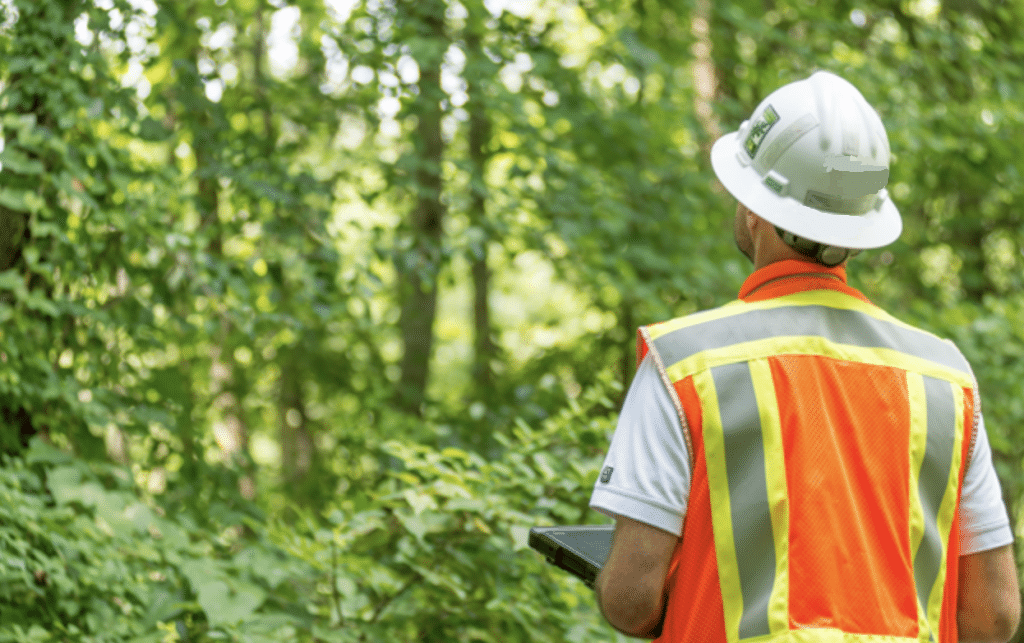
Every assessment starts with an on-site inspection. Certified arborists examine not only the individual tree but also the surrounding environment that may affect its health and stability.
They observe factors such as nearby buildings, grading changes, drainage patterns, soil conditions, neighboring trees, and potential construction impacts. Understanding the entire site helps determine whether environmental conditions are contributing to tree decline or increasing future risks.
A comprehensive inspection creates the foundation for every professional evaluation.
Identifying Tree Species and Age
Correct species identification is an important part of the assessment process because every tree has unique growth characteristics, expected lifespan, disease susceptibility, and maintenance requirements.
Arborists document the species along with measurements such as trunk diameter, commonly measured as Diameter at Breast Height (DBH), tree height, and canopy spread. These measurements help determine whether municipal bylaws apply and provide valuable baseline information for future monitoring. Official reports typically include a complete tree inventory with species, size, condition, and mapped locations.
Evaluating Overall Tree Health
Certified arborists carefully examine the entire tree for signs of good health or early decline. Their evaluation considers far more than green leaves or outward appearance.
The assessment typically includes:
- Leaf size, colour, and density
- Seasonal growth patterns
- Crown fullness
- Dead or dying branches
- New shoot development
- Bark condition
- Signs of environmental stress
Healthy foliage often indicates good vitality, while thinning canopies, premature leaf drop, or sparse growth may point to underlying issues requiring further investigation.
Because trees can decline gradually over several years, identifying subtle warning signs early allows property owners to address problems before they become more serious.
Inspecting the Trunk and Structural Integrity
A tree’s trunk provides important clues about its long-term stability. Certified arborists inspect for visible defects including cracks, cavities, decay, seams, fungal growth, lightning damage, mechanical injuries, and weak branch attachments. They also assess trunk lean, structural balance, and any evidence of internal deterioration.
Not every defect automatically requires tree removal. Instead, arborists evaluate how each condition affects the overall structural integrity of the tree and whether corrective measures may reduce risk. These observations become important components of the final arborist report, especially when safety concerns or permit applications are involved.
Assessing Root Health
Arborists evaluate visible root flare, exposed roots, soil compaction, drainage conditions, excavation damage, and signs of root decay. Construction activities, trenching, and changes in grade can severely impact root systems even when the tree canopy initially appears healthy.
When development projects are planned, arborists assess how excavation may affect nearby trees and establish appropriate Tree Protection Zones to minimize damage. Construction impact analysis and preservation recommendations are standard elements of professional reports.
Looking for Disease and Pest Activity
Trees can suffer from numerous diseases, fungal infections, and insect infestations that compromise their health over time. Certified arborists look for symptoms such as:
- Discoloured foliage
- Cankers
- Fungal fruiting bodies
- Exit holes from insects
- Sap leakage
- Deadwood
- Abnormal growth patterns
Accurate diagnosis requires knowledge of tree biology and local pest activity. Identifying these problems early allows arborists to recommend treatment, monitoring, or removal depending on the severity of the issue.
Conducting a Risk Assessment
Tree health alone does not determine whether a tree poses a safety concern. Certified arborists also evaluate the likelihood of failure and the potential consequences if failure occurs. This includes examining nearby buildings, driveways, sidewalks, vehicles, utility lines, and areas with frequent pedestrian activity.
Using recognized industry methodologies, arborists assess the probability of branch or tree failure while considering the condition of structural defects, site conditions, and potential targets. Risk evaluation using ISA-recognized methods is a key component of official arborist reports.
Preparing a Detailed Professional Report
Once the field assessment is complete, the arborist compiles all findings into a structured report.
A professional report typically includes:
- Tree inventory and measurements
- Species identification
- Health assessment
- Structural observations
- Risk evaluation
- Photographs
- Site plans or mapping
- Construction impact analysis when required
- Recommendations for preservation, pruning, treatment, monitoring, or removal
Rather than offering general opinions, the report provides evidence-based recommendations supported by the inspection findings. This documentation helps municipalities, insurers, property owners, and contractors make informed decisions while ensuring compliance with local regulations.
Trust Us for Accurate Arborist Reports
We prepare detailed, municipality-ready reports that help homeowners, developers, businesses, and property managers move forward with confidence. Our ISA-certified arborists carefully assess tree health, structural integrity, construction impacts, and potential risks before preparing every arborist report. We provide accurate documentation, practical recommendations, and reports designed to meet local bylaw requirements while helping you protect both your property and your trees.