



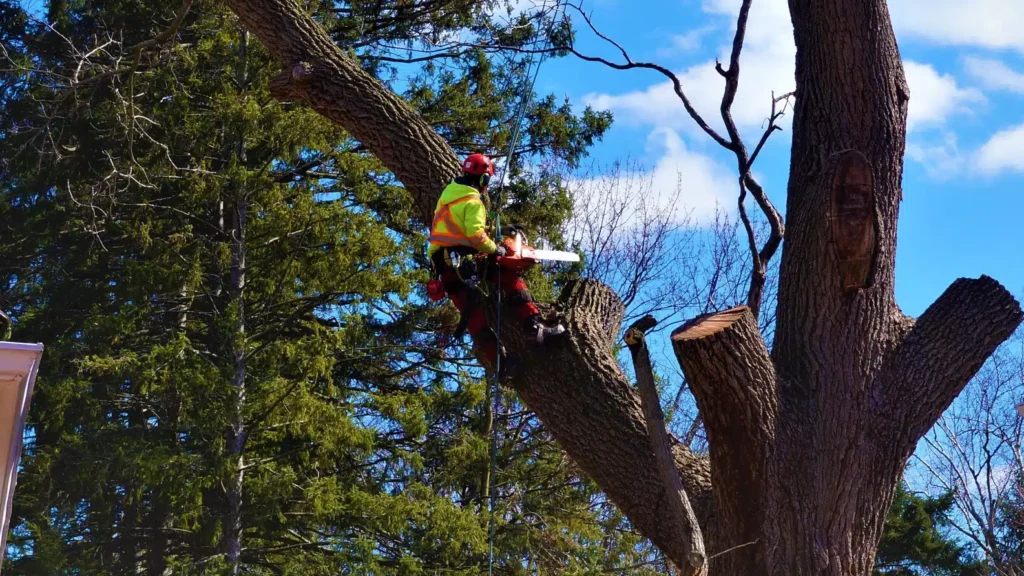
A tree doesn’t always wait for a convenient time to become a problem.
One day, it may be standing perfectly well in your yard. The next, a powerful storm can send a massive branch crashing onto your driveway, or a tree can suddenly begin leaning toward your home. In situations like these, waiting for a standard tree removal appointment may not be the safest choice.
That’s where understanding the difference between emergency and regular tree removal matters. Although both involve removing potentially hazardous trees, the circumstances, urgency, planning, and safety considerations can be very different.
What Is Emergency Tree Removal?
Emergency tree removal is performed when a tree or large branch creates an immediate or potentially serious safety hazard.
Storms are one of the most common causes. High winds, lightning, heavy snow, and ice can weaken or break trees, leaving them partially fallen or dangerously unstable. However, emergencies can also happen when a tree suddenly fails structurally, loses major roots, or becomes severely compromised by disease or other damage.
The defining factor is urgency. If a damaged tree is threatening a home, vehicle, power line, road, or another area where people could be injured, the situation needs prompt attention. This is when emergency tree services may be appropriate.
What Is Regular Tree Removal?
Regular tree removal is generally planned in advance.
A tree may have been declining for several years, have significant disease or decay, be growing too close to a structure, or simply need to be removed as part of a landscaping project. If the tree isn’t an immediate danger, you usually have time to arrange an inspection, get estimates, plan the work, and decide on the safest approach.
This additional time can make the entire process more predictable. A professional can assess the tree, evaluate surrounding structures and landscaping, determine required equipment, and establish a removal plan before work begins.
The Biggest Difference Is Timing
The clearest distinction between the two types of removal is how quickly you need action.
With regular removal, you can usually schedule the work around your availability and the tree care company’s schedule. With emergency removal, the priority is reducing an active hazard as soon as reasonably possible.
For example, a dead tree that has been standing safely in the backyard for months may qualify for regular removal. If that same tree falls during a storm and lands across your driveway, blocking access to your home, the situation has changed.
Likewise, a large branch that is simply overgrown may not be an emergency. But if it breaks and becomes suspended above your roof, it can suddenly become a significant safety concern.
Emergency Removal Requires a Different Safety Assessment
Removing a healthy, stable tree is already skilled work. Removing a damaged or partially fallen tree can be considerably more complicated.
Storm-damaged trees can contain hidden stresses and unstable sections. A trunk may be under tension, branches can be suspended unpredictably, and roots may have been pulled out of the ground. Professionals need to determine how the tree is likely to move as they cut different sections.
The surrounding environment matters, too. A tree resting against a house or tangled in utility lines requires a very different approach from a tree standing in an open field. This is one reason emergency tree services should be handled by trained professionals rather than treated as a DIY cleanup project.
Regular Removal Allows More Planning
When removal isn’t urgent, there is usually more opportunity to prepare. A professional tree company can inspect the site and consider questions such as:
- Where will the tree fall?
- What structures are nearby?
- Is specialized equipment required?
- How will branches and trunk sections be removed?
- Can surrounding plants or landscaping be protected?
- Is stump removal necessary afterward?
- Are permits required?
- How will debris be handled?
Planning these details beforehand can help reduce surprises and make the project more efficient.
Emergency Situations Can Involve Secondary Hazards
A fallen tree isn’t necessarily the only problem. Storm damage can bring down branches, damage fences, block roads, expose roots, and potentially interfere with electrical infrastructure. A tree that has fallen near a power line is especially dangerous.
Never attempt to cut, move, or climb a tree that is touching or close to an electrical line. Stay away and contact the appropriate utility provider or emergency authority.
Even when there are no power lines involved, watch for unstable branches overhead. A tree that appears to have finished falling may still contain suspended or weakened sections that can move unexpectedly.
Does Every Storm-Damaged Tree Need Emergency Removal?
No. Storm damage doesn’t automatically mean a tree must be removed immediately, or removed at all.
An arborist may determine that a tree can be preserved through appropriate pruning, cabling, monitoring, or other care. In other cases, structural damage may be too severe, making removal the safest option.
The decision depends on factors such as the extent of damage, the tree’s overall health, its structural stability, and its surroundings. That’s why an assessment is important before deciding what to do.
When Should You Call for Emergency Help?
Consider seeking emergency tree services when you notice an immediate hazard such as:
- A tree has fallen onto a house, vehicle, or other structure
- A large branch is suspended over a frequently used area
- A tree has suddenly developed a severe lean
- The trunk has split or cracked significantly
- Major roots have been exposed or lifted from the ground
- A fallen tree is blocking an entrance or access route
- Storm damage has left a tree dangerously unstable
When in doubt, keep people and pets away from the area until the tree can be professionally evaluated.
Prevention Can Reduce Future Emergencies
The best emergency tree problem is the one that never happens. Regular inspections can help identify dead branches, decay, weak branch unions, disease, root problems, and other structural concerns before they become urgent. Proper pruning can also help maintain healthy tree structure and reduce certain risks.
Of course, no inspection can prevent every storm-related failure. Severe weather can damage even healthy trees. But routine care can help identify vulnerabilities before nature has the opportunity to expose them.
Know the Difference Before You Need It
Regular tree removal is a planned project. Emergency tree removal responds to an immediate or developing hazard.
Understanding that distinction can help you make safer decisions when something goes wrong. If a tree is simply unwanted or declining without posing an immediate threat, you may have time to plan the removal carefully. If it has fallen, split, or become dangerously unstable, delaying action could put people or property at unnecessary risk.
When the situation is urgent, professional emergency tree services can help assess the hazard and determine the safest way forward.