



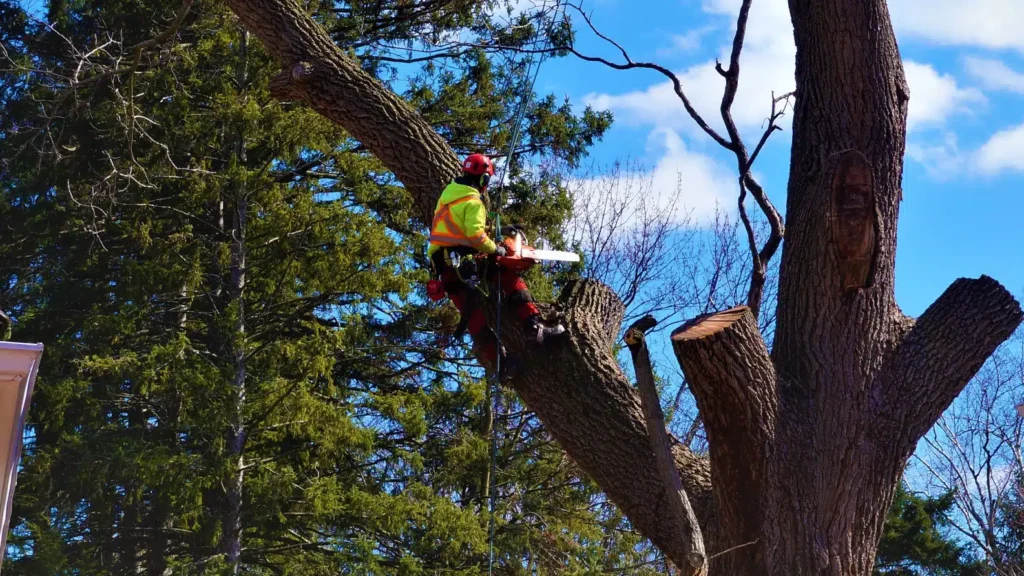
When a large tree needs to come down, homeowners often wonder how many professionals they’ll have to involve. A tree service, obviously. An arborist, probably. But what about an engineer? The question usually comes up when the tree is close to the house, leaning over a garage, growing beside a retaining wall, or standing on a slope. It’s a fair question, because removing a mature tree isn’t just cutting it down; it can affect the ground and structures around it.
The short answer is that most residential tree removals don’t need an engineer. The person you need first is a qualified arborist. However, specific situations may require an engineer’s input, and knowing the difference can save you unnecessary costs and expensive surprises.
Who Normally Assesses a Tree?
For the tree itself, the right expert is an arborist, ideally an ISA Certified Arborist. Arborists assess tree health, structure and risk. They can tell you whether a tree is dying, whether decay has weakened the trunk, how the roots are likely to spread, and whether removal is necessary or pruning would be enough.
In Mississauga, an arborist is also usually central to the permit process. The City’s Private Tree Protection By-law requires a permit to injure or remove any private tree 15 cm (6 inches) or greater in diameter, including dead or dying trees. That threshold is measured 1.4 meters above the ground and is lower than in many neighboring municipalities, so plenty of ordinary backyard trees are covered. Depending on the application, the City may ask for an arborist report to support it.
The City also generally requires replacement planting. One replacement tree is typically required for every 15 cm of trunk diameter removed, so a 45 cm tree would call for three replacements. Once a complete application is submitted, the City lists a review period of 30 business days, which is worth factoring into your timeline.
In other words, most tree removal Mississauga projects involve an arborist, a permit and a qualified removal crew, but no engineer at all.
When an Engineer Should Be Involved
There are situations where the tree’s removal could affect a structure, the soil or the safety of the work itself. In these cases, an engineer, usually a structural or geotechnical engineer, adds expertise that an arborist doesn’t provide.
The Tree Is Very Close to the Foundation
Large trees draw enormous amounts of water from the soil. On properties with clay-heavy soil, which is common across parts of the GTA, removing a big tree beside a house can change soil moisture levels over time. As the soil rehydrates, it may swell slightly, and in some cases that movement can affect foundations, basement floors or walkways.
This doesn’t happen with every tree, and it’s not a reason to keep a hazardous tree standing. But if a very large tree sits right beside the house, especially one that has been there longer than the home, and there are already cracks or signs of movement in the foundation, it may be worth having a structural engineer assess the situation before removal.
Roots Are Tangled With a Structure
Tree roots sometimes grow under or into foundations, retaining walls, pool decks, garages or underground services. Removing the tree is one step; removing or grinding the stump and major roots is another. If root removal could undermine a wall or footing, an engineer can advise on how to do it without compromising the structure, or whether roots should be left in place.
The Tree Supports a Slope or Retaining Wall
Roots help hold soil together. On sloped properties, particularly near ravines, creeks and the Credit River valley, removing large trees can affect slope stability. A geotechnical engineer can assess whether removal could cause erosion or soil movement and recommend stabilization measures.
Properties near watercourses may also fall under conservation authority regulations, such as those of Credit Valley Conservation, in addition to the City’s tree bylaw. Check with the City or the relevant conservation authority before any work begins.
A Crane or Heavy Equipment Is Needed
When a large tree can’t be safely taken down in sections by climbers, a crane may be used to lift pieces over the house. Crane work involves ground bearing capacity, outrigger placement and load calculations. For complex or heavy lifts, especially over structures or near power lines, a crane company may require an engineered lift plan. Reputable tree removal companies that use cranes regularly will know when this is needed and arrange it.
The Tree Is Part of a Construction Project
If you’re building an addition, a new home or a significant landscaping project, tree removal is often tied into the broader development process. Site plans, grading plans and tree preservation plans may involve engineers, architects and arborists working together. In these cases, the engineer’s role relates to the construction project as a whole, not just the tree.
The Tree Has Damaged a Structure
If a tree or large limb has already fallen onto your house, the priority is safety. Once the immediate hazard is removed, an engineer may need to inspect the structure for damage to framing, trusses or foundations before repairs begin. Your insurance company may also require a professional assessment.
Other Checks Before a Large Removal
Even when no engineer is needed, several other steps protect you from problems:
- Confirm who owns the tree: Trees on the City boulevard or road allowance are public trees and fall under separate rules. You can’t remove or prune them yourself.
- Check for boundary trees: If the trunk sits on a property line, it may legally belong to both neighbors, and both should agree before removal.
- Locate underground utilities: Stump grinding and root removal can hit gas, water, cable or electrical lines. Ontario One Call provides free locates, and a professional crew should arrange this before digging or grinding.
- Stay clear of power lines: Trees near overhead wires need to be handled by crews qualified for utility clearance work, often in coordination with the local utility.
- Verify insurance and WSIB coverage: Large tree removals carry real risk. Ask your contractor for proof of liability insurance and a WSIB clearance certificate before work begins.
Questions to Ask Your Arborist
A good arborist can usually tell you whether an engineer is worth involving. Before you book an expert for tree removal in Mississauga, ask:
- Is removal definitely necessary, or would pruning or cabling solve the problem?
- How close are the major roots to my foundation, walls or services?
- Could removing this tree affect the soil, slope or nearby structures?
- Will you need a crane, and if so, does the lift require an engineered plan?
- Will the stump and roots be ground out, and how deep?
- What does the permit process involve, and how long will it take?
If the arborist has concerns about the foundation, a slope or a structure, they’ll typically recommend bringing in an engineer before the work goes ahead. That’s a sign of a careful professional, not an upsell.
The Cost of Skipping Steps
Removing a protected tree without a permit in Mississauga is a bylaw offence and can lead to substantial fines, along with orders to plant replacement trees. Removing a tree without understanding its effect on nearby structures can lead to foundation, wall or drainage problems that cost far more than an engineering assessment.
At the same time, there’s no reason to pay for an engineer when the situation doesn’t call for one. A backyard tree well away from the house, on level ground, with no structural concerns, needs an arborist’s assessment, a permit if it’s protected, and a qualified crew, and nothing more.
Simply put, for most properties, you don’t need an engineer before removing a large tree. An ISA Certified Arborist is the right starting point, and in Mississauga, the permit process will often involve one anyway. Engineers become important when the tree is close to a foundation, tied into a retaining wall or slope, needs a complex crane lift, or is part of a larger construction project. When those factors are present, a short consultation can prevent costly structural problems later.